Try it
White-label version.
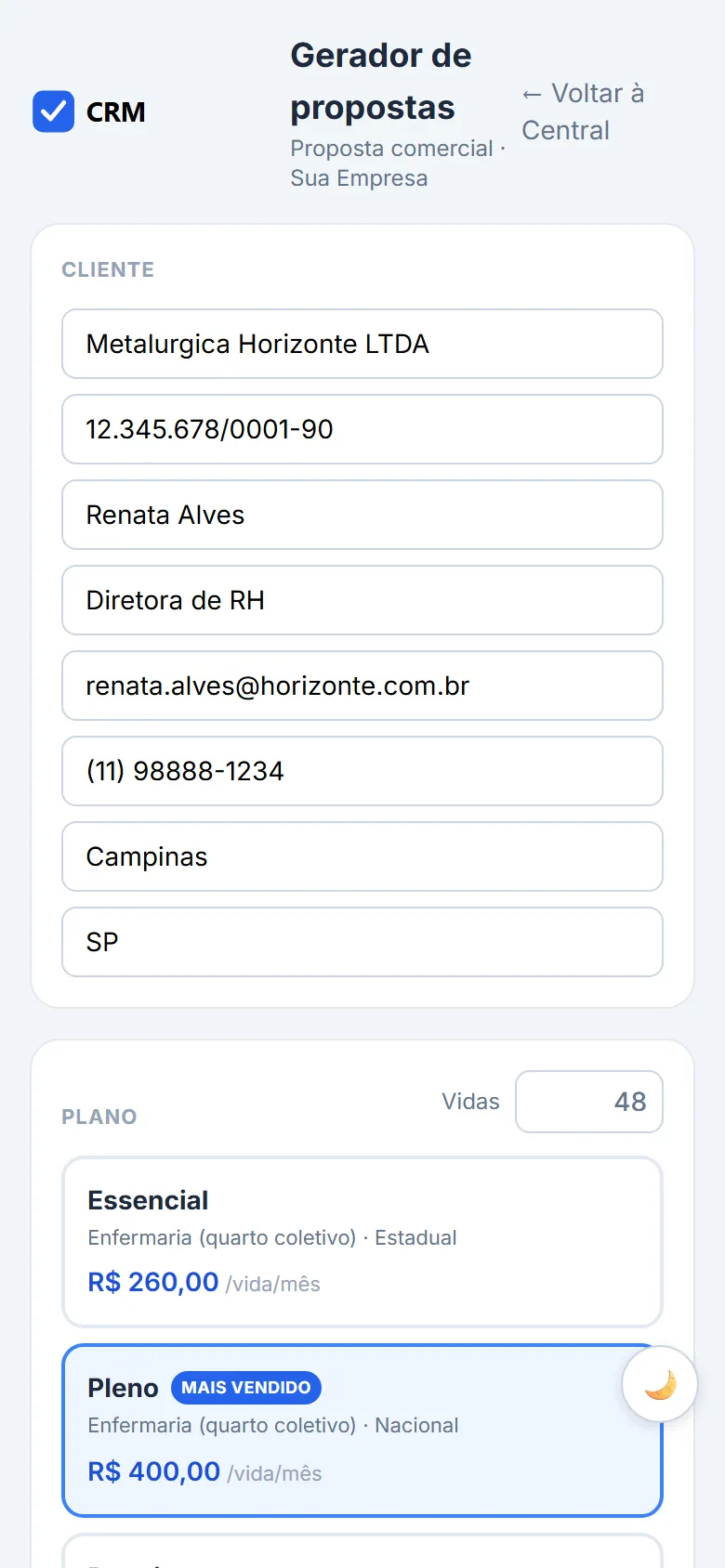
A neutral instance of the generator, with sample data, so you can build a proposal and download the PDF.
AI systems
A rep used to assemble every proposal by hand: copy the last one, update the prices, re-check the maths. Then type it all again into a contract. Every retype was a chance to send a wrong number to a customer.
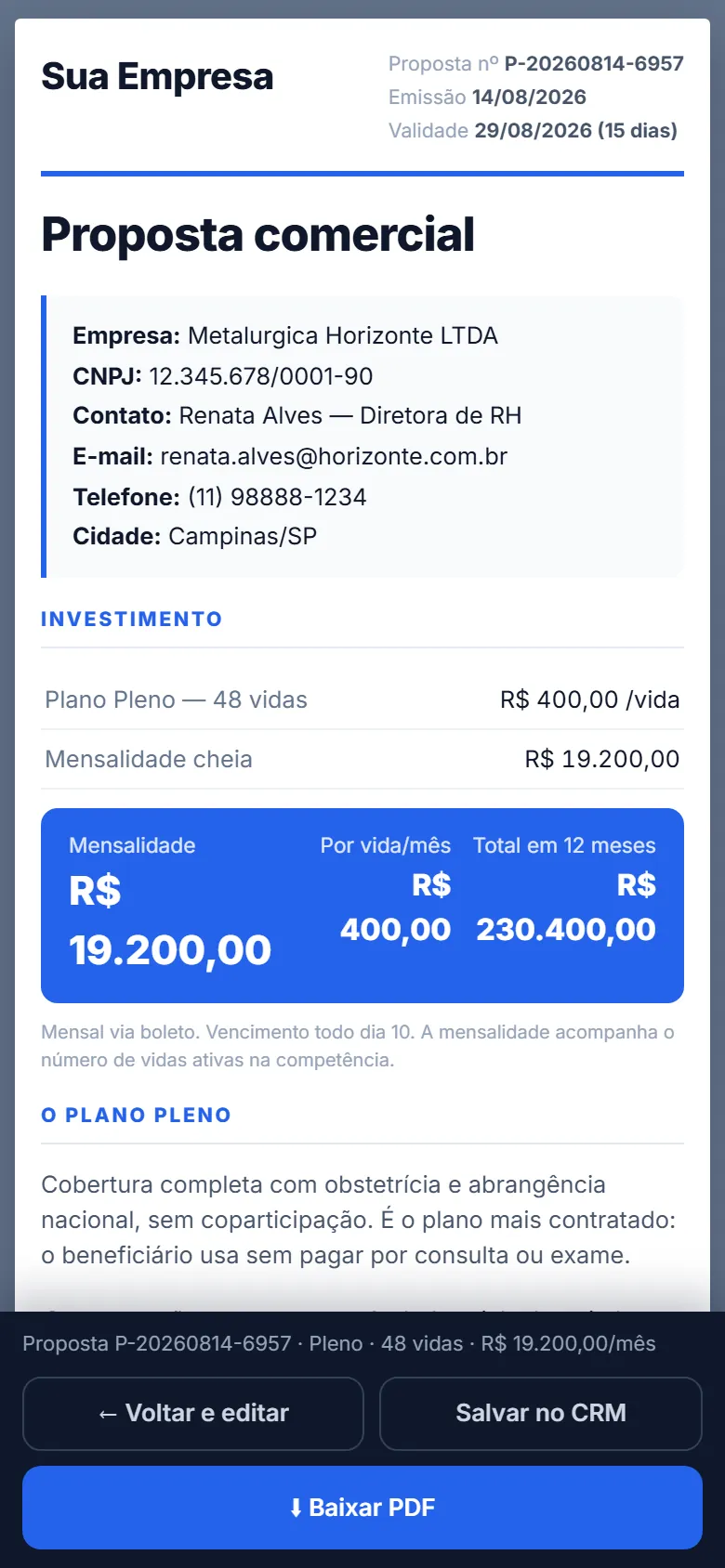
A proposal generator that renders a branded PDF from a template and the deal's own data. And a contract generator that assembles the final document from eleven partner templates, pulling the proposal's figures.
Financing runs on a fixed amortisation formula in code, not in a spreadsheet someone maintains.
Both are template-driven: brand, clauses and maths live in one place. A pricing change is a template change, not a memo asking eleven people to remember.
Every generated document is recorded, which turned proposal volume into an analysis the sales director actually reads.
From ~30 minutes to ~2 per proposal. And the part that mattered more than the time: the contract cannot disagree with the proposal, because it reads from it.
Why this matters
Half an hour spent assembling a proposal is half an hour off the phone and out of the field. At ten proposals a week, that adds up to a full selling day per rep.
The 80/20 of a salesperson is selling. Everything else in the process has to be fast enough that it never competes with that: pick the plan, review, download. The paperwork gets out of the way and the document still comes out right.
Try it
A neutral instance of the generator, with sample data, so you can build a proposal and download the PDF.